







 简体中文
简体中文 Español
 Français
 Deutsch
 Русский
 Português
 Italiano
 日本语
日本语 한국어
한국어 العربية
 Türkçe
 Tiếng Việt
 ไทย
ไทย Indonesia
 Melayu
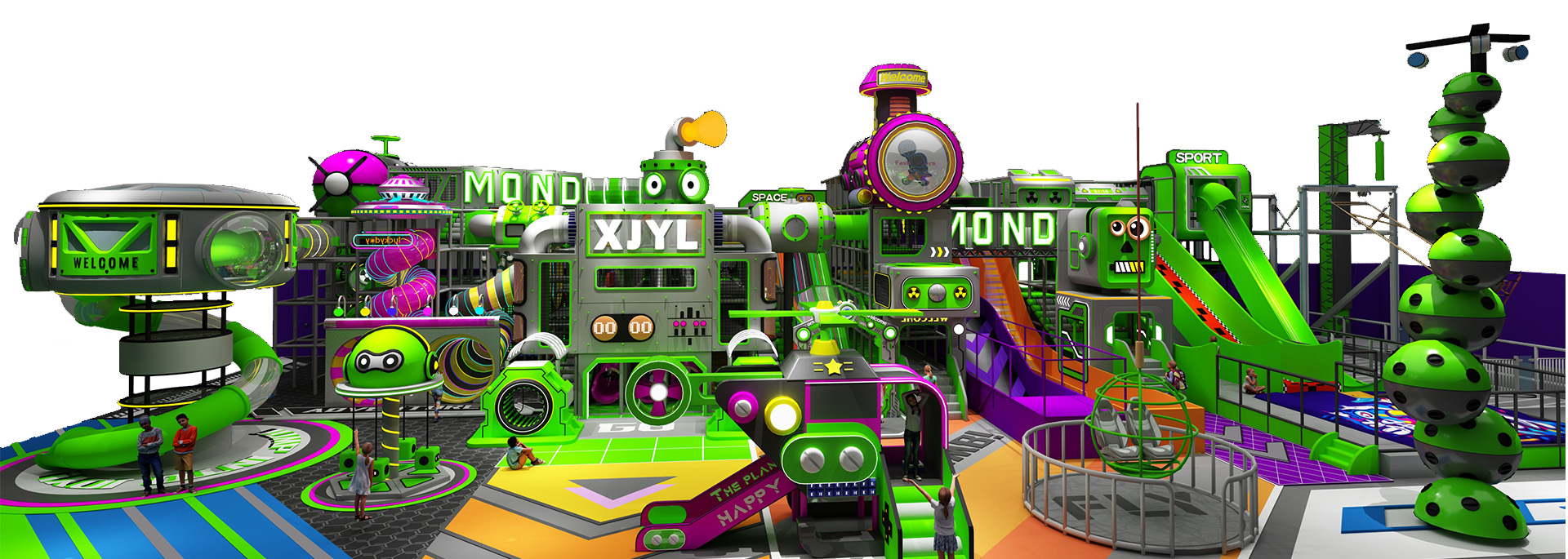
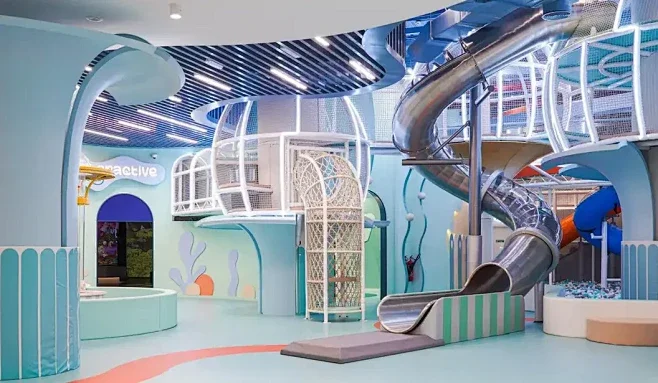
1. Underlying Business Logic: Why the “Vertical Slide” Shortens ROI Cycles
While traditional soft play structures and ball pits cover basic childcare needs, conventional commercial indoor playground equipment suffers from three key bottlenecks in today’s social-media-driven market:
- Weak Visual Impact: Lacks Instagrammable attraction spots, making it difficult to generate organic viral marketing for indoor play parks.
- Single Revenue Stream: Overly dependent on admission tickets with limited room for secondary consumption and upselling in indoor theme parks.
- Fast Customer Churn: Children quickly lose interest as they grow older, dragging down the indoor playground customer retention rate.
The Traffic Magnet
Integrating a Vertical Slide (Near-Vertical High-Altitude Slide) upgrades static indoor playgrounds into a dynamic hub of emotion and visual spectacle, making it a essential element in modern indoor amusement park design:
- Maximized Space Yield: As a high-yield indoor amusement attraction, it utilizes vertical height rather than expanding horizontally, creating a stunning focal point within a minimal footprint.
- Organic Viral Potential: The dramatic vertical drop and screaming riders naturally create short-video and photo-worthy content, driving low-cost organic customer acquisition.
2. Business Efficiency Comparison: Traditional Play Areas vs. Vertical Slide Combo
When evaluating an indoor play park franchise or indoor playground equipment manufacturer budget, understanding ROI is crucial. Below is a side-by-side performance comparison:
| Business Metric | Traditional Play Area (Soft Play / Ball Pit) | Vertical Slide Combo (Vertical Slide Matrix) | Commercial Value & ROI Impact Analysis |
| Footprint Efficiency | Large footprint, high horizontal expansion cost, average appeal | Expands vertically, minimal footprint, high visual presence | Drastically increases space yield and unit profitability |
| Social Virality | Low shareability, lacks photo-worthy spots | Extremely high; drives viral user-generated content and challenges | Reduces offline customer acquisition marketing costs by 90% |
| ARPU & Secondary Sales | Limited to basic ticket sales with low upsell capacity | Allows flexible add-ons like “Courage Passes” or photo packages | Diversifies and increases Average Revenue Per User (ARPU) |
| Repeat Visits | Appeal degrades quickly as children age | Builds gamified challenges and level achievement systems | Extends retention lifecycle for older kids and teens (Ages 6–15) |
| ROI Cycle | Typically long (18–24+ months) | Significantly shortens indoor park payback period | Accelerates capital investment payback period |
3. Execution Framework: A 3-Step Monetization Closed Loop
Partnering with a reliable indoor playground equipment manufacturer to install a Vertical Slide goes beyond buying hardware; it requires an end-to-end indoor park operational strategy covering traffic acquisition, revenue diversification, and risk management.
Step 1: Drive Traffic via Visual Focal Points & Viral Sharing
- Prime Location Positioning: Place the slide in the central atrium or entrance zone to immediately capture visitors’ attention.
- Challenge Badges & Social Incentives: Launch a “Little Warrior Slide Challenge.” Reward participants with custom physical badges or digital certificates to encourage parents to share achievements on social media.
Step 2: Maximize Revenue via Secondary Spending (Upselling)
- Action Photography Services: Install high-speed smart camera systems at the thrill points to capture instant expressions, offering printed photos, video clips, and digital downloads for high-margin sales.
- Branded Gear Add-ons: Upsell custom grip socks, protective long-sleeve suits, or thematic challenge outfits to convert single ticket purchases into high-value experiential packages.
Step 3: Ensure Operational Safety & Cost Optimization
- Tiered Slide System: Combine steep vertical slides with beginner-level options to cater to various age groups and courage levels, reducing abandonment rates due to fear.
- Standardized Safety Protocol:
- Enforce clear posture rules (e.g., crossed arms).
- Equip high-density air-cushion zones and smart infrared sensor gates to eliminate collision risks.
- Comprehensive safety design minimizes insurance exposure and lowers manual supervision costs.
4. Investor FAQ
Q1: The Vertical Slide looks intense. How can we eliminate safety concerns for parents and drive conversions?
In-Depth Answer: Focus on “Visible Safety.” Display official safety certification badges prominently near the equipment and showcase heavy-duty padding and protective gear. Additionally, deploy certified instructors to demonstrate proper posture and guide players continuously, turning safety management into a premium service experience.
Q2: The Vertical Slide mainly targets older kids. How do we keep families with younger toddlers engaged?
In-Depth Answer: Implement a “Multi-Tiered All-Age Playground Matrix.” Position lower-incline rainbow slides or soft-padded mini slides alongside the main attraction. This preserves the Vertical Slide’s viral marketing power while ensuring safe, age-appropriate fun for toddlers, covering all demographic segments.
As competition in the indoor entertainment sector intensifies, relying solely on traditional soft play areas and single ticket sales is no longer a viable path to fast profitability. The Vertical Slide is far more than an eye-catching attraction—it is a strategic commercial solution integrating a visual traffic magnet, high footprint yield, high-margin secondary monetization, and all-age demographic reach.
By leveraging smart layout design, automated photo capture upsells, and standardized safety protocols, indoor park operators can dramatically lower customer acquisition costs while boosting Average Revenue Per User (ARPU)—ultimately accelerating the ROI cycle for indoor playground investments and securing a sustainable competitive edge.