




 简体中文
简体中文 Español
 Français
 Deutsch
 Русский
 Português
 Italiano
 日本语
日本语 한국어
한국어 العربية
 Türkçe
 Tiếng Việt
 ไทย
ไทย Indonesia
 Melayu
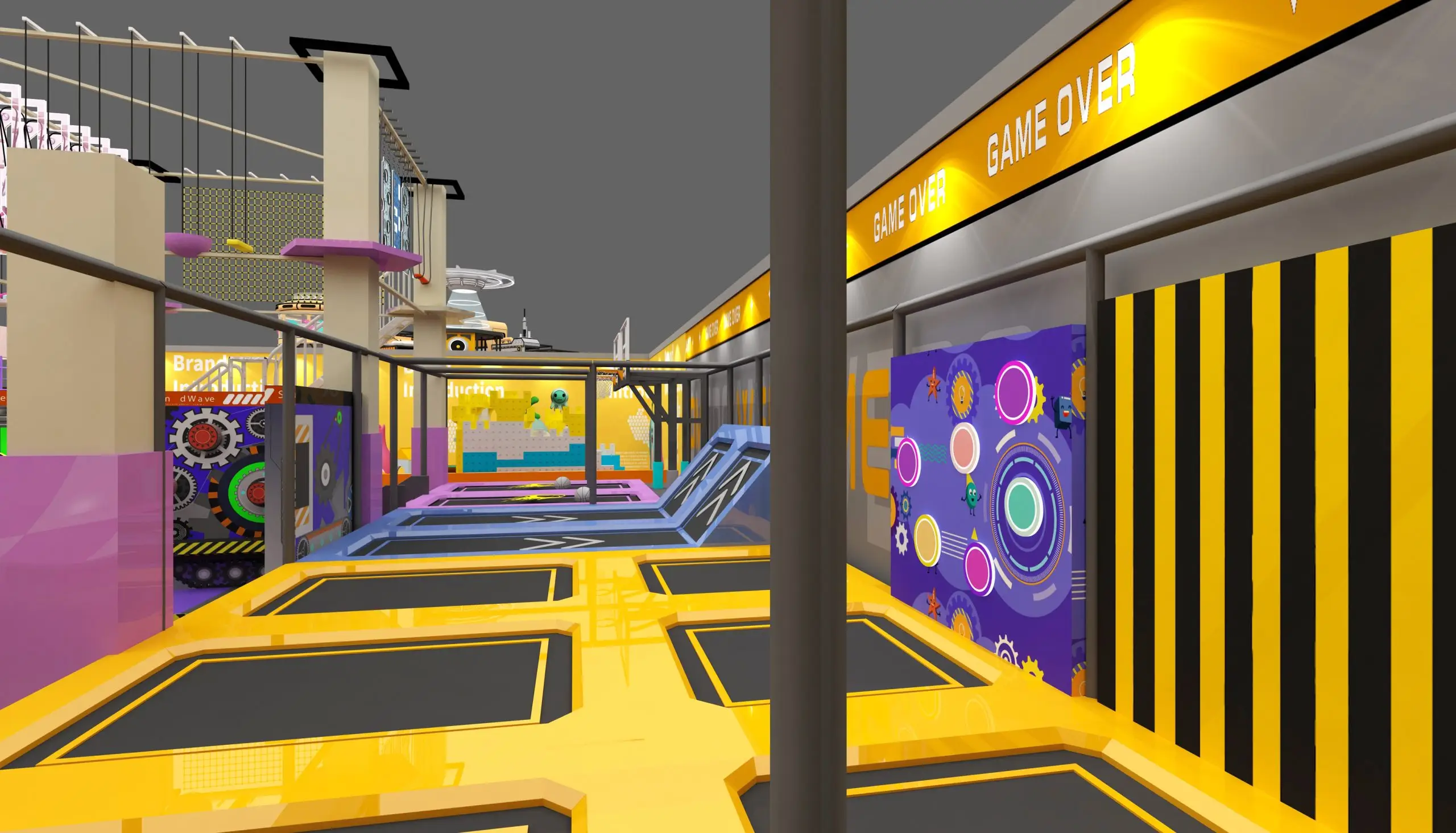
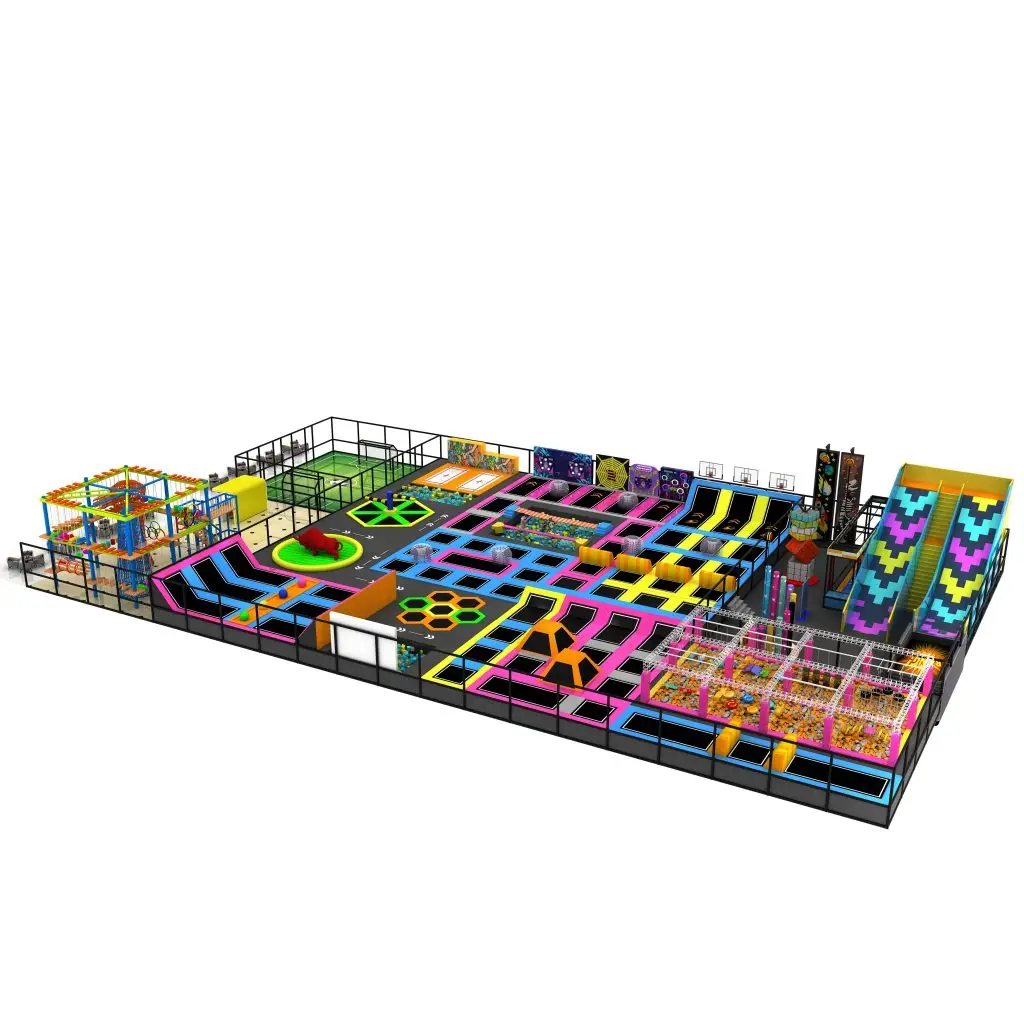
When purchasing safety netting for commercial trampoline parks, many indoor playground operators fall into a low-price trap, prioritizing cheaper Nylon netting to minimize upfront capital expenditure. However, data from global indoor play industry cases confirms a harsh reality: cheap nylon mesh cannot withstand the high-frequency, high-impact demands of commercial venues.
In most commercial settings, nylon netting begins to sag, fray, or snap within less than six months. At best, this triggers frequent maintenance and inflates operational costs; at worst, a sudden net rupture can lead to severe patron falls or collisions, resulting in legal disputes and devastating damage to the brand’s reputation.
As a long-term manufacturer specialized in custom commercial indoor playground equipment, Ledi has handled numerous venue retrofits. The vast majority of nylon netting failures stem from the material’s inherent physical limitations—not poor installation or improper maintenance.
1. Deep Dive: Three Fatal Weaknesses of Cheap Nylon Netting in Commercial Settings
Weakness 1: High Hygroscopicity (Moisture Absorption) Causes Severe Sagging
Nylon is naturally hydrophilic (moisture-absorbing). While this flaw remains hidden in low-traffic, dry residential environments, it becomes a critical vulnerability in enclosed, high-humidity indoor trampoline parks filled with sweat and water vapor.
Industry Data: Nylon’s standard moisture absorption rate ranges between 6% and 10%. Once saturated, its internal fiber structure softens, causing its tensile strength to drop by more than 25%. This leads to irreversible, permanent deformation. The once-taut net sags downward within 2 to 3 months, failing to provide the necessary retention force and significantly increasing the risk of patrons falling out of the play zone.
Weakness 2: Poor Fatigue Resistance Triggers Sudden, Unwarned Ruptures
Safety netting in a commercial trampoline park is not a static decoration; it is a dynamic safety barrier that endures hundreds of high-velocity impacts from adults and children daily. This constant stretching, bending, and rebounding places massive cyclic stress on the mesh threads.
Nylon possesses poor flex fatigue resistance. Under repeated dynamic loading, microscopic cracks and fiber breakages develop inside the threads that are completely invisible to the naked eye. Regular visual inspections rarely catch these hidden flaws. When subjected to a single high-intensity impact, these accumulated internal damages instantly bottleneck, causing the netting to rip wide open without any prior warning.
Weakness 3: Inadequate Friction Heat Resistance Breeds Hidden Structural Failures
When dynamic grip socks or cotton apparel rub against the safety net at high speeds, localized friction instantly generates high temperatures. Nylon’s melting point and thermal friction limits are significantly lower than professional commercial-grade materials.
Consequently, the cross-knots and intersection points—which endure the highest friction—sustain continuous thermal wear. The threads gradually thin out and suffer localized melting. Because these damages are hidden within the joints, they are incredibly difficult to spot during daily walk-throughs, silently undermining the entire structural stability of the trampoline enclosure.
2. Comprehensive Comparison of Commercial Trampoline Netting Materials
Based on the latest international amusement equipment standards (such as ASTM F2970 and EN 1176) and long-term commercial field data, we have benchmarked the three main netting options to guide your procurement:
| Metrics | Cheap Nylon Netting(Not Recommended) | High-Strength Polyester (PET)(Top Commercial Choice) | High-Density Polyethylene (PE)(Budget-Friendly Alternative) |
| Moisture Absorption & Strength Retention | High absorption (6%-10%). Strength drops 25%-30% in humid conditions. Highly unstable. | Absorption below 0.5%. Zero strength fluctuation across dry/wet conditions. Perfect for humid indoor parks. | Near-zero absorption. Completely waterproof and moisture-resistant. Stable load-bearing capacity. |
| Long-Term Tensile Elongation | High deformation. Significant sagging occurs within 1-2 months. Fails to stay taut. | Extremely low elongation. Retains zero-sag structure under long-term heavy loads year-round. | Moderate elongation. Decent short-term sag resistance; experiences slight aging deformation over time. |
| Fatigue & Impact Lifespan | Prone to hidden internal stress damage. High probability of breaking within 3-6 months. | Exceptional fatigue resistance. Endures millions of impacts. Lifespan reaches 24-36 months. | Good impact resistance. Lifespan ranges between 12-18 months. Great cost-performance ratio. |
| Friction & Wear Resistance | Poor heat resistance. Nodes easily melt, fray, and thin out. Very low durability. | High heat/friction resistance. Knotless weaving prevents thread friction. Zero breakpoints. | Good abrasion resistance, moderate heat resistance. Suitable for standard perimeter barriers. |
| User Tactile Safety | Rough surface texture. High-speed friction easily scrapes skin. Poor user experience. | Fine knotless weave. Smooth to the touch, providing optimal skin protection for children. | Stiff and rigid texture. Meets safety standards but offers basic tactile comfort. |
| Commercial Compliance | Fails to meet ASTM F2970 commercial safety standards. High compliance risks. | Fully complies with global commercial trampoline park safety codes (ASTM, EN, CE). | Meets general amusement safety standards. Suitable for standard mid-to-small venues. |
3. Commercial Trampoline Netting Procurement & Maintenance Checklist
To eliminate safety hazards from the source, extend equipment service life, and lower operational overhead, Ledi recommends implementing the following standardized framework:
1. Core Procurement Strategy
- Prioritize High-Strength Knotless Netting: Avoid traditional knotted nets entirely. Knots concentrate stress loads, making them the primary points of failure. Knotless weaving distributes impact forces evenly across the entire surface, drastically improving impact life.
- Reinforce High-Stress Zones: Areas where the netting meets the trampoline steel frame, ground corners, and high-impact zones must feature double-layered mesh and thickened webbed edge binding to dissipate concentrated stress.
- Verify Compliance Certifications: Always demand comprehensive material test reports and ASTM or CE safety certification documents from your supplier. Reject cheap, uncertified, non-standard netting to protect your business from legal liabilities.
- Select the Right Mesh Size: Commercial venues should opt for a standard 6cm × 6cm mesh aperture. This size effectively prevents children’s limbs from getting trapped while maintaining excellent ventilation and visual transparency across the venue.
2. Daily Three-Step Inspection Protocol
- Tactile Check (Weekly): Physically feel high-impact netting zones. Check if the threads feel stiff, brittle, frayed, or thinned out. If these signs are present, the fibers have degraded and the section must be replaced immediately.
- Deformation Measurement (Monthly): Measure the center sag depth of the netting and compare it against the initial installation baseline. If the sag exceeds compliance thresholds, retighten or replace the net immediately to ensure the required safety barrier height is maintained.
- Visual Audit (Regularly): Monitor the color of the netting. Localized fading, whitening, or yellowing are direct indicators of material embrittlement and structural decline. Prioritize these areas for immediate replacement.
4. FAQ: Commercial Netting Procurement Answered
Q1: Why does Nylon netting pass lab tests perfectly but snap within six months in a real park?
Ledi: Most laboratory tests are conducted under dry, static, single-pull ideal conditions, which only reflect the material’s peak theoretical limits. Real-world commercial trampoline parks feature high humidity, sweat exposure, and tens of thousands of cyclic dynamic impacts. Nylon’s moisture degradation and fatigue vulnerabilities scale up drastically in these real environments, causing it to fail much faster than lab metrics predict.
Q2: Can low-traffic or smaller indoor parks use Nylon netting to save upfront costs?
Ledi: We strongly advise against it. Even with lower foot traffic, the humid, enclosed indoor climate will continuously degrade Nylon mesh—it merely extends the failure timeline slightly. The risk of sudden, un-warned breakage is always present. If a safety incident occurs, the legal liabilities, compensation fees, and structural remediation costs will heavily outweigh what you saved on the initial price difference.
Q3: How can I distinguish premium Polyester (PET) netting from cheap imitations during sourcing?
Ledi: Premium commercial-grade polyester netting is manufactured using virgin, high-tenacity fibers. It features a knotless, smooth texture, stays tight over years of use, and never loses color. Legitimate manufacturers can provide complete, official English verification reports (e.g., from SGS). Cheap imitations are often spun from recycled plastic fibers, display uneven thread thickness, fray easily under low impact, and carry zero safety certifications.
Q4: What custom commercial solutions can Ledi provide for trampoline netting and full venue fit-outs?
Ledi: As an established B2B one-stop custom commercial indoor playground equipment manufacturer, Ledi delivers turnkey safety netting and complete amusement park systems tailored to your venue’s footprint, traffic volume, and market position. Our builds come standard with high-strength knotless polyester (PET) safety netting, supporting variable thickness, targeted reinforcement, and custom colorways—all backed by official ASTM, CE, and SGS certifications. Furthermore, we provide global clients with free site measurement, 3D conceptual design, overseas factory-direct installation, and extensive post-sales maintenance support to guarantee stable, long-term operations.