





 简体中文
简体中文 Español
 Français
 Deutsch
 Русский
 Português
 Italiano
 日本语
日本语 한국어
한국어 العربية
 Türkçe
 Tiếng Việt
 ไทย
ไทย Indonesia
 Melayu
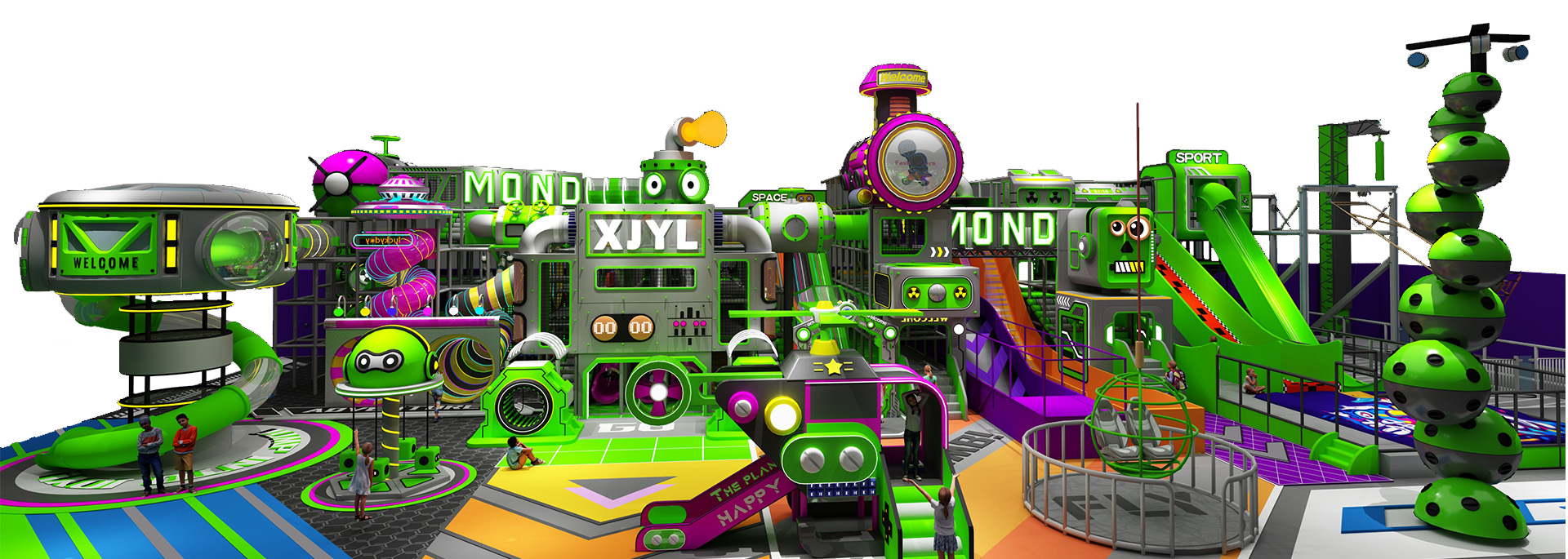
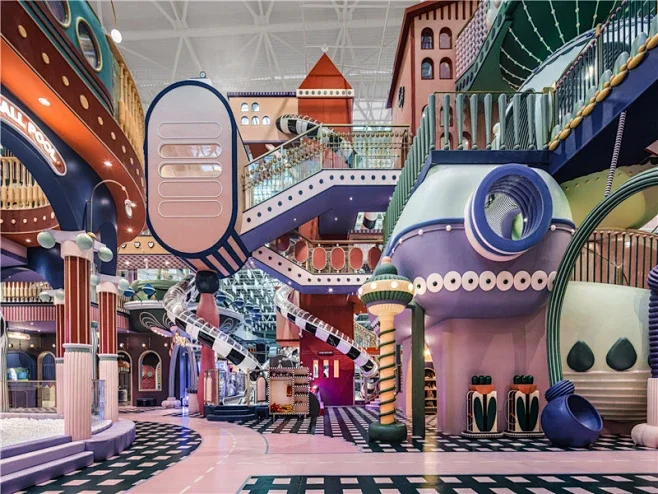
If you manage an indoor playground long enough, you inevitably hit the “3-Year Curse”: Grand opening crowds are massive, but 18 months in, visitor frequency drops steadily. When you want to upgrade your equipment, you are immediately trapped by the double whammy of costly shutdowns and hefty renovation bills.
Putting up fresh posters or offering recharge discounts only treats the symptoms, not the root cause. Children quickly lose their sense of exploration on unchanging play structures.
Having spent years specializing in amusement equipment customization and retrofitting, Ledi has found that old-school indoor playgrounds built with integrated welded structures lack the flexibility for iterative updates. Commercial modular design, however, opens up a path for venues to continuously refresh their spaces at a low cost.
I. The Real Pain Points: You Aren’t Losing Visitors; You’re Losing “Freshness”
The core decision-making logic for family consumers has shifted from “finding a place to play” to “always having new experiences to check out.” Children’s natural curiosity means their tolerance for repeating the exact same set of facilities is extremely low.
Venues that skip hardware updates for too long don’t just see a drop in repeat visits; word-of-mouth and community referrals stall out, driving customer acquisition costs higher year after year. Worse yet, traditional full-scale overhauls come with hidden cascading consequences:
- Massive Closure Losses: Traditional welded structures mean that replacing a climbing net or soft obstacle is practically equivalent to tearing down half the facility. Two weeks or more of downtime means losing profitable weekend traffic entirely.
- Collateral Damage: Large-scale dismantling easily scratches PVC flooring, safety padding, and wall murals, turning subsequent repairs into an extra financial burden.
- Lengthy Stagnation Periods: A major overhaul happens once every 2 or 3 years, leaving the venue vulnerable to competitors who make small, frequent updates to steal your loyal family demographic.
II. The Core Solution: What Is a Modular Quick-Disassembly System?
Modularization isn’t just cutting equipment into smaller pieces. It’s about establishing standardized interfaces from the design stage, giving every play unit the capability of independent installation, single-unit replacement, and cross-site reuse.
Using Ledi’s framework as an example, an entire playground is broken down into four major categories: climbing net modules, soft-play obstacle modules, tunnel passage modules, and platform transition modules, all equipped with standardized load-bearing hooks, quick-lock buckles, and anti-corrosion connectors.
Take the high-demand replaceable climbing net as an example:
Traditional nets are permanently bound to the main frame, meaning removal damages the structure. The modular version hangs externally on the outer side of the main steel frame, completely avoiding any modification to the primary load-bearing skeleton.
If operators want to upgrade to high-durability imported nylon ropes, interactive light-sensor net arrays, or multi-layered net courses with varying difficulty, the installation crew can complete the swap within a single overnight shutdown window, ready for business the next morning.
III. Traditional Overhaul vs. Modular Localized Upgrades
| Comparison Dimension | Traditional Full-Scale Overhaul | Modular Localized Unit Update |
| Mandatory Closure Time | 7–16 days (includes dismantling, reassembly, and safety checks) | 0–2 days (prioritizes overnight off-peak work, normal daytime operations) |
| Collateral Venue Damage | High (frequently damages mats, padding, and wall finishes) | Extremely Low (targets specific modules only; surrounding areas untouched) |
| Impact on Member Traffic | Significant (wide-scale closure causes customer confidence to drop) | Minimal (small temporary barriers; rest of the venue operates normally) |
| Hardware Update Frequency | Every 2–3 years (too slow, risks falling behind competitors) | Every 6–12 months for single-module replacement (frequent freshness) |
| Future Retrofit Compatibility | Fixed structure; future upgrades require major dismantling again | Universal interfaces; any future module can be added or swapped independently |
IV. Execution Guide: Revitalizing Old Venues with Climbing Net Modules
Drawing on Ledi’s extensive experience with existing venue retrofits, climbing net upgrades follow a standardized, highly reproducible workflow:
- Precise Targeting: Review venue heatmaps to identify high-traffic climbing zones, heavily worn net sections, and dead zones with poor user feedback, locking down the exact scope of replacement.
- Factory Pre-fabrication: Based on accurate measurements of the venue’s existing steel frame, pre-fabricate standardized net modules that fit the original attachment points, optionally upgrading them with interactive sensors or new theme colors.
- Off-Peak Rapid Installation: Coordinate installation crews during non-business hours to handle buckle fastening, load testing, and edge protection reinforcement without touching the original steel structure.
- Community Promotion: Leverage private community channels upon relaunch, highlighting the new net obstacle course as a fresh attraction to organically draw repeat customers back.
V. Small Modules, Big Revenue: The Long-Term Value of Low-Cost FEC Upgrades
Many operators view modular replacements merely as maintenance fixes, ignoring their natural marketing power.
Every minor hardware update serves as a low-cost content marketing opportunity. Posting real photos of a new obstacle net on social media or community groups creates a steady perception among parents that “this place always has something new.”
By splitting upgrades into frequent, smaller batches instead of massive overhauls, your venue stays fresh and competitive year-round, extending the lifespan and profitability of your family entertainment center (FEC).
High-Frequency Operator Q&A
Q1: Will swapping modular units independently compromise the stability and safety rating of the original playground steel frame?
A1: Not at all. Ledi’s modular accessories use external independent load-bearing hooks, meaning the weight is entirely borne by the module itself without transferring stress to the original main steel frame. The installation requires no welding, drilling, or cutting, and every replacement undergoes multi-point load sampling to match brand-new safety standards.
Q2: Older venues often have steel frame spacing errors. Can custom modules fit the original mounting points seamlessly?
A2: Before the project begins, technical staff conduct on-site surveys, recording hook heights, horizontal/vertical spacing, and tube diameters. The factory then micro-adjusts the modular hanging positions to ensure direct, seamless mounting without destructive modifications.
Q3: Can the old climbing nets and modules replaced during upgrades be repurposed?
A3: Yes. Well-maintained old modules can be stored and reused for temporary theme decorations, partitioned play area barriers, or small family event props, or disassembled for spare repair parts to further cut down long-term operational consumables.